

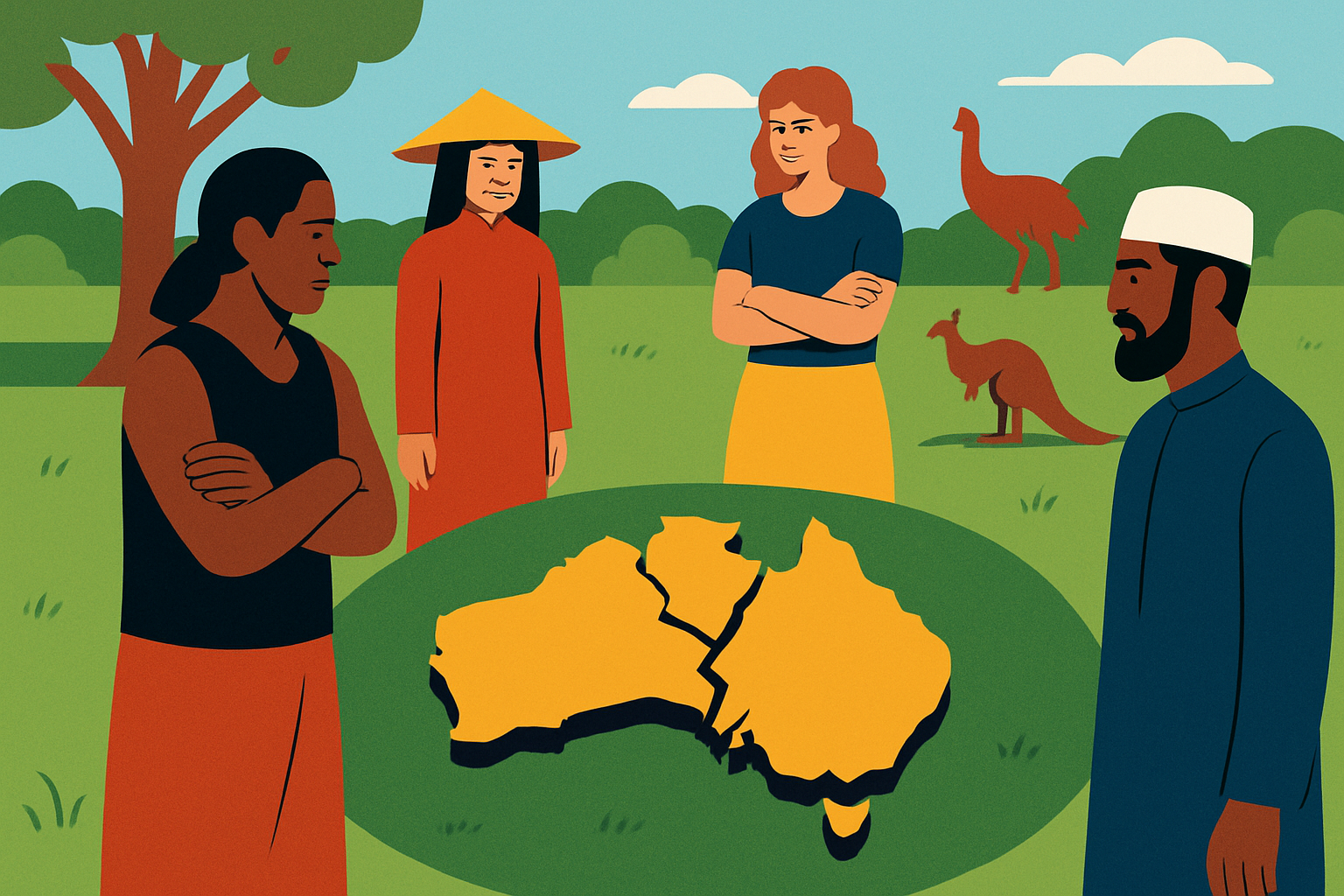
Australia is currently grappling with significant challenges to its social cohesion, a situation brought into sharp focus by the recent tragic attack on Jewish Australians in Bondi. This incident has underscored the fragility of social bonds in a nation that prides itself on multiculturalism. The concept of social cohesion, traditionally seen as a positive force for unity, has become contentious, with some viewing it as a call for conformity rather than as a means to foster genuine community resilience.
The Scanlon Foundation has highlighted that economic disparities in Australia have reached concerning levels. A striking 30% of Australians are experiencing limited social mobility, a statistic that reveals the growing chasm between different socio-economic groups. This lack of mobility is a critical factor undermining social cohesion, as it restricts individuals’ opportunities to improve their circumstances, thereby perpetuating cycles of disadvantage.
Politicians are now being urged to take decisive action to redefine multiculturalism in a way that truly embraces diversity and addresses systemic inequalities. These inequalities disproportionately affect marginalised communities, exacerbating feelings of exclusion and disenfranchisement. For Australia to move forward as a cohesive society, it is imperative that these systemic issues are tackled head-on, ensuring that all citizens have equitable access to opportunities and resources.
For HR professionals and business leaders, understanding these dynamics is crucial. The workplace is a microcosm of broader society, and as such, it plays a pivotal role in either perpetuating or alleviating social tensions. Creating inclusive workplaces that reflect and support Australia’s diverse society is not only a moral imperative but also a strategic one. By fostering an environment where all employees feel valued and supported, organisations can enhance employee engagement, productivity, and retention.
HR leaders must therefore be proactive in implementing policies and practices that promote diversity and inclusion. This includes recognising and addressing unconscious biases, providing diversity training, and ensuring that recruitment and promotion processes are equitable. By doing so, organisations can help bridge the gaps that exist within society, contributing to a more cohesive and resilient community.
In conclusion, the challenges to Australia’s social cohesion require a concerted effort from all sectors of society, including the business community. By addressing economic disparities and systemic inequalities, and by fostering inclusive workplaces, Australia can build a more unified and resilient society. For HR professionals, this is an opportunity to lead the way in creating environments that not only reflect the diversity of the nation but also support its social cohesion.