

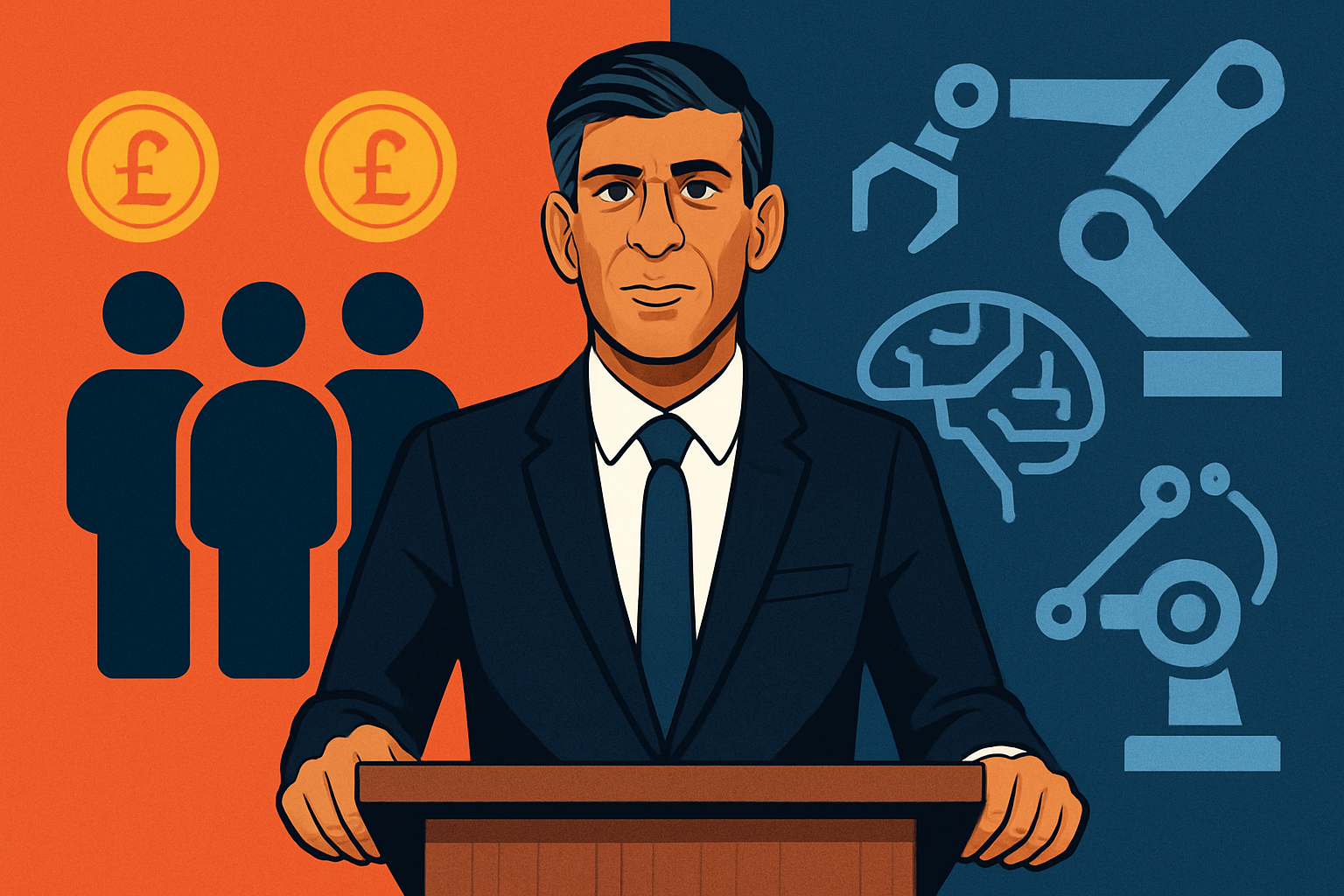
Rishi Sunak has recently underscored the necessity for a comprehensive reevaluation of job taxation in response to the transformative impact of artificial intelligence (AI) on employment practices. As AI continues to redefine the landscape of hiring, Sunak has pointed out a significant disparity in the current taxation system: while human employees are subject to national insurance contributions, there are no equivalent taxes imposed on the deployment of AI technologies.
This call for reform is grounded in research findings that suggest AI is influencing hiring trends, particularly affecting younger workers. Although AI is not directly causing an increase in unemployment rates, it is contributing to a slowdown in hiring, especially in entry-level positions. This trend presents a challenge for HR professionals and business leaders who must navigate the complexities of workforce planning in an era where AI is increasingly prevalent.
Sunak’s proposal includes the establishment of an AI economics institute designed to provide real-time data on labour market dynamics. Such an institute would serve as a valuable resource for understanding the nuanced effects of AI on employment and could aid in the development of informed taxation and workforce strategies. By having access to up-to-date information, HR professionals would be better equipped to make strategic decisions that align with the evolving economic landscape.
Additionally, Sunak has emphasised the importance of equipping the workforce with AI-related skills. As AI continues to automate routine tasks, the demand for roles requiring such skills is expected to rise. This shift necessitates a proactive approach from HR departments to ensure employees are adequately trained and prepared for the changing job market. Investing in AI skills development will not only enhance individual employability but also bolster organisational resilience in the face of technological advancements.
For senior HR professionals and business leaders, the implications of Sunak’s advocacy are significant. It highlights the need for a forward-thinking approach to both taxation and workforce planning. As AI continues to evolve, it is crucial for organisations to adapt their strategies to remain competitive and sustainable. This includes rethinking taxation models to ensure fairness and equity between human and AI contributions to the workforce.
In conclusion, Rishi Sunak’s call for a job tax overhaul in light of AI’s impact on hiring practices presents a critical opportunity for HR professionals to reassess their strategies. By considering the potential implications of AI on workforce planning and taxation, organisations can better position themselves to thrive in an increasingly automated world. As the conversation around AI and employment continues to evolve, staying informed and adaptable will be key to success.